How Public Safety Facilities Support Safer Communities
Authored by:
Paul Michell, Vice President of Government & Managing Partner
Mitch Cook, Civic Practice Leader & Associate Partner
When communities invest in new police and fire facilities, a common and important question follows: How does this make us safer? It’s a fair question, especially when public dollars are involved, but the answer is more nuanced than a simple cause and effect.
Public safety facilities do not create safety on their own. Risk in the field is managed by people—police officers and firefighters making decisions in real time, often under pressure. Safety is improved not by the building itself, but by the preparedness, coordination, and performance of the professionals responding.
The role of a facility is to support that performance.
What Facilities Don’t Do
New facilities do not replace staffing, eliminate risk, or guarantee faster response in every situation. They do not solve every challenge a department faces. But they do remove barriers—reducing friction in how public safety professionals train, communicate, deploy, and recover, often in ways not visible to the public but critical in moments that matter. In public safety, outcomes are driven by people, but performance is shaped by the environment they operate in.
Response and Deployment
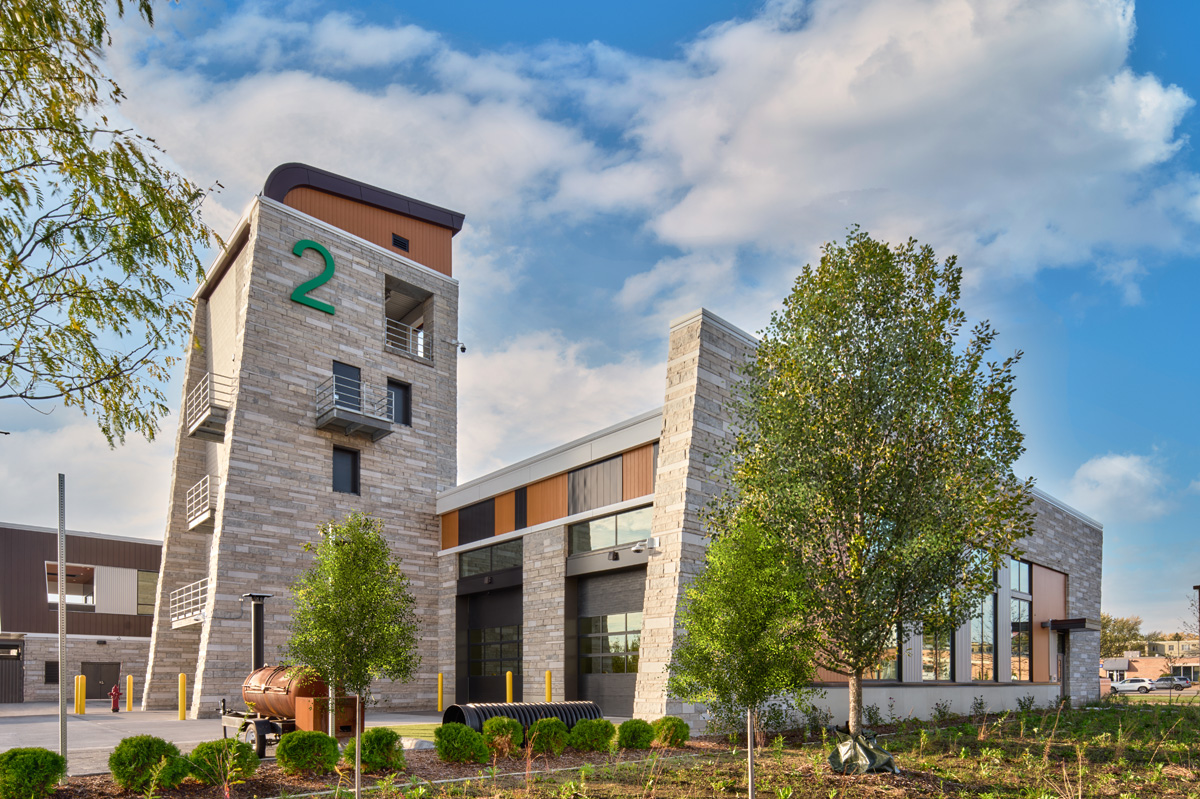
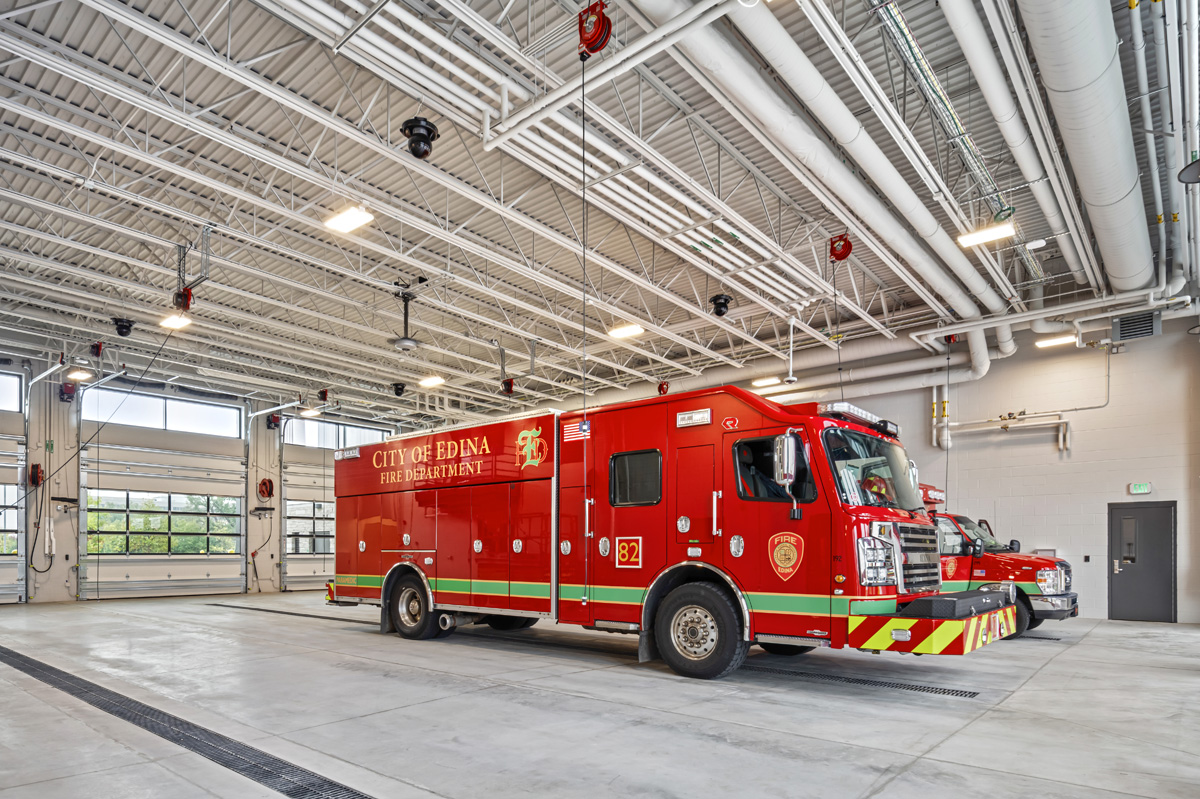
For fire departments, facility design has a direct and measurable relationship to response. Apparatus bay layout, turnout zones, and site circulation all influence how quickly crews can move from alert to deployment. Well-designed facilities reduce delays, improve efficiency, and support compliance with response time expectations. In fire response, seconds matter—facility design can directly influence how quickly crews are able to deploy.
Police operations function differently. Officers are often already in the field, on patrol, and not responding from the station in the same way. However, facilities still play an important role, particularly during critical incidents. Stations serve as coordination points, places to regroup, share information, and deploy resources effectively when situations escalate.
For both police and fire, the facility supports not just response—but coordinated response.
Training and Operational Readiness
One of the most direct ways facilities support community safety is through training. Well-designed facilities create opportunities for consistent, on-site training that many older or undersized buildings cannot support. This applies to both police and fire departments and represents a shift in operational capability.
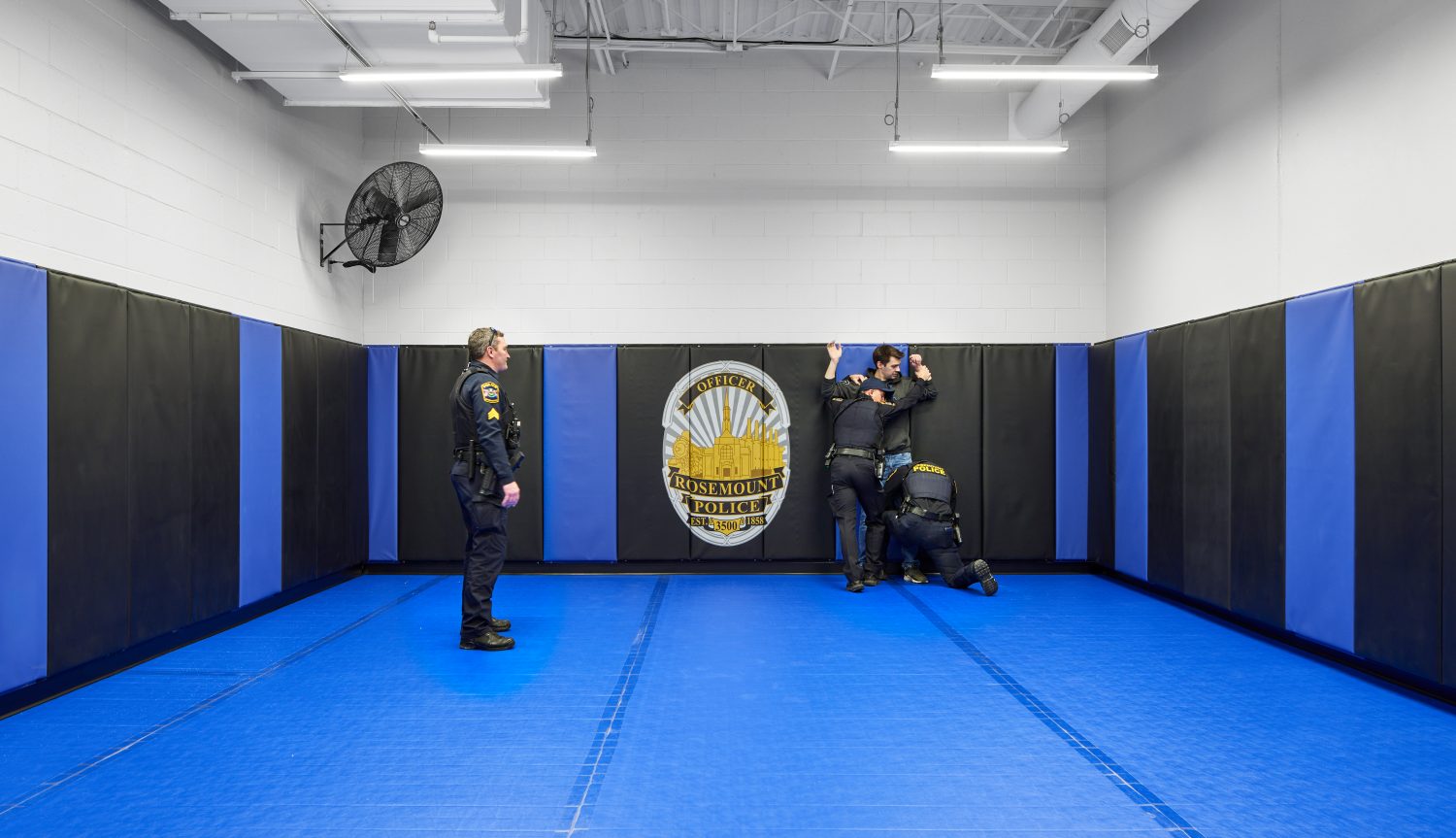
For police, this includes spaces for defensive tactics training, scenario-based exercises, and structured briefings that improve communication and situational awareness. For fire departments, it includes hands-on training, equipment familiarity, and coordinated response drills that reinforce readiness. In many cases, this also includes training towers or multi-story drill structures that support real-world scenario training. In combined facilities, these elements can be designed to serve both police and fire, expanding their value across departments.
When training occurs within the facility, departments can train more frequently, more consistently, and with greater participation. Increased training frequency directly improves readiness and response in the field. It reduces the need for off-site or out-of-town training, which often comes with added cost, travel time, and lost availability for daily responsibilities.
The result is simple: better-trained responders who make better decisions.
Coordination, Information, and Emerging Capabilities
Modern public safety increasingly depends on the ability to gather, interpret, and act on information quickly.
For police departments, facilities now support capabilities such as real-time crime centers, spaces for crime analysts, and coordinated environments for major case investigations. These spaces allow departments to connect information across incidents, recognize patterns, and respond proactively. Increasingly, this includes integration with social workers and behavioral health professionals—on staff or through partnerships—who help address community needs not best handled through enforcement alone. These co-responder models allow for more measured responses, reducing escalation while still providing necessary support.
Technologies such as drones as first responders are also changing how departments operate, requiring dedicated space for coordination and deployment—either from the field or from centralized operations. These evolving models reflect a broader shift in how law enforcement approaches community safety—expanding beyond response to include prevention, intervention, and coordination with other service providers.
Fire departments benefit from similar improvements, particularly in multi-company response and integration with emergency management. They also support the growth of community risk reduction programs, focused on education, prevention, and proactive outreach that reduce incidents and strengthen long-term community safety. Facilities that support these interactions improve communication and strengthen overall response effectiveness.
In some communities, co-location of police, fire, and emergency management further enhances this coordination, allowing departments to work together more seamlessly during complex or large-scale incidents. Modern facilities create environments where information is shared faster, decisions are made more clearly, and responses are better coordinated.
Efficiency and Time Back to the Mission
A less visible—but equally important—benefit of new facilities is operational efficiency. Older facilities often create inefficiencies in storage, circulation, and adjacencies. Equipment may be difficult to access. Spaces may not support how departments actually function. Time is lost navigating the building rather than focusing on core work.
Well-designed facilities reduce that friction. They allow staff to access equipment quickly, move efficiently through the building, and spend more time focused on their core responsibilities. Over time, these incremental improvements return time and attention to the mission. Efficiency is not about convenience. It is about enabling public safety professionals to spend more time doing what they are trained to do.
Community Engagement and Relationships
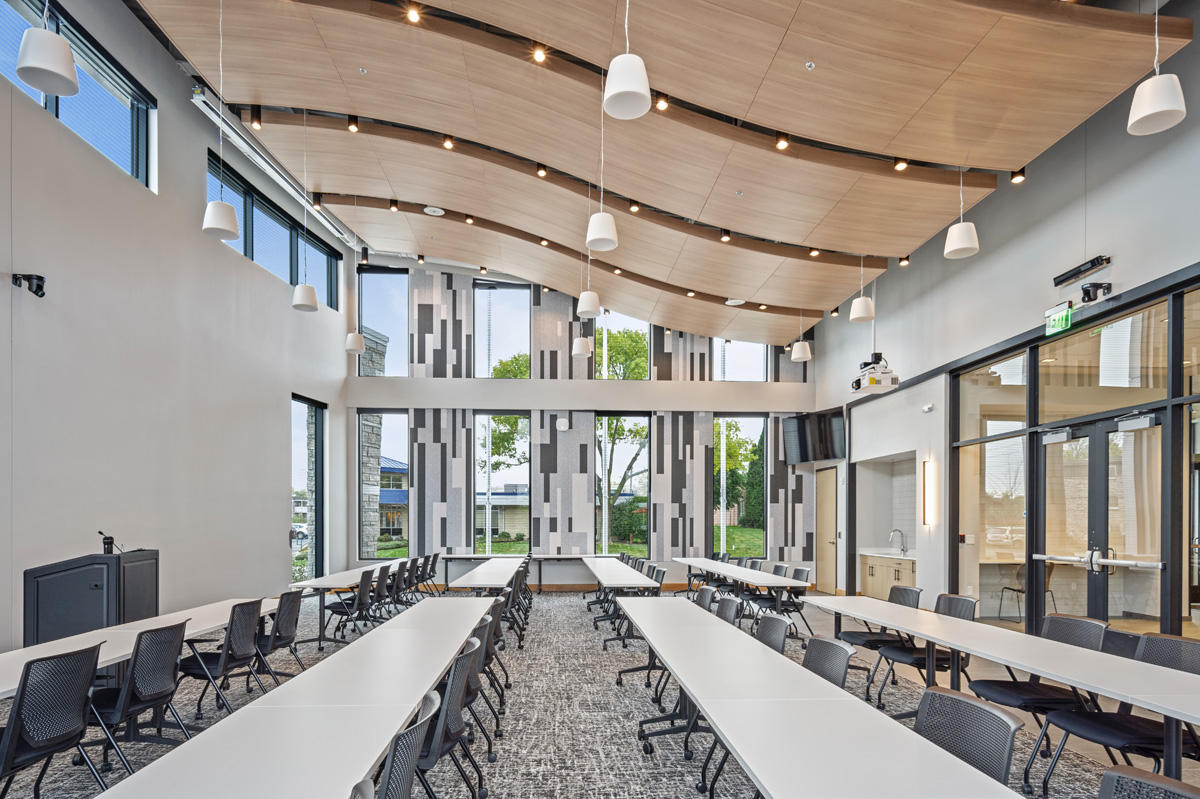
Public safety facilities also play an important role in how departments connect with the communities they serve. Well-designed spaces can support community interaction, public education, and outreach efforts that strengthen relationships over time and contribute to a greater sense of safety within the community.
For both police and fire, these interactions are part of a broader approach to community safety—building trust, improving communication, and creating opportunities for engagement outside of emergency response. When departments are visible, accessible, and engaged, communities are more informed, more confident in their services, and more likely to feel safe. Facilities that support these functions help departments remain visible, accessible, and connected to the community, reinforcing both actual safety and the public’s confidence in it.
Personnel Health, Wellness, and Performance
Public safety professionals are expected to perform at a high level—physically, mentally, and emotionally—and facilities play an important role in supporting what can be described as a “healthy building” environment for responders.
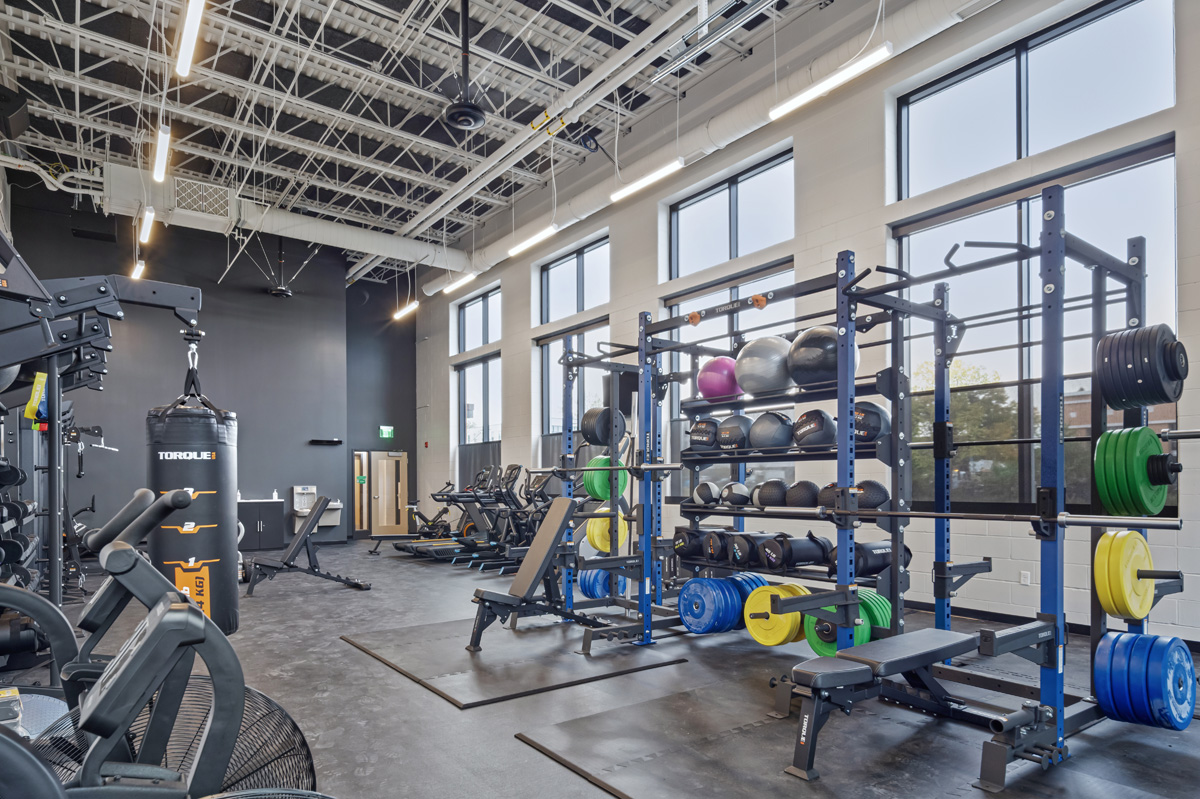
For both police and fire, physical training and fitness are essential. Dedicated spaces for physical training help ensure that personnel are prepared for the demands of the job. For police, defensive tactics training is a critical component of officer safety and effective response. For firefighters, physical readiness is fundamental to nearly every aspect of their work.
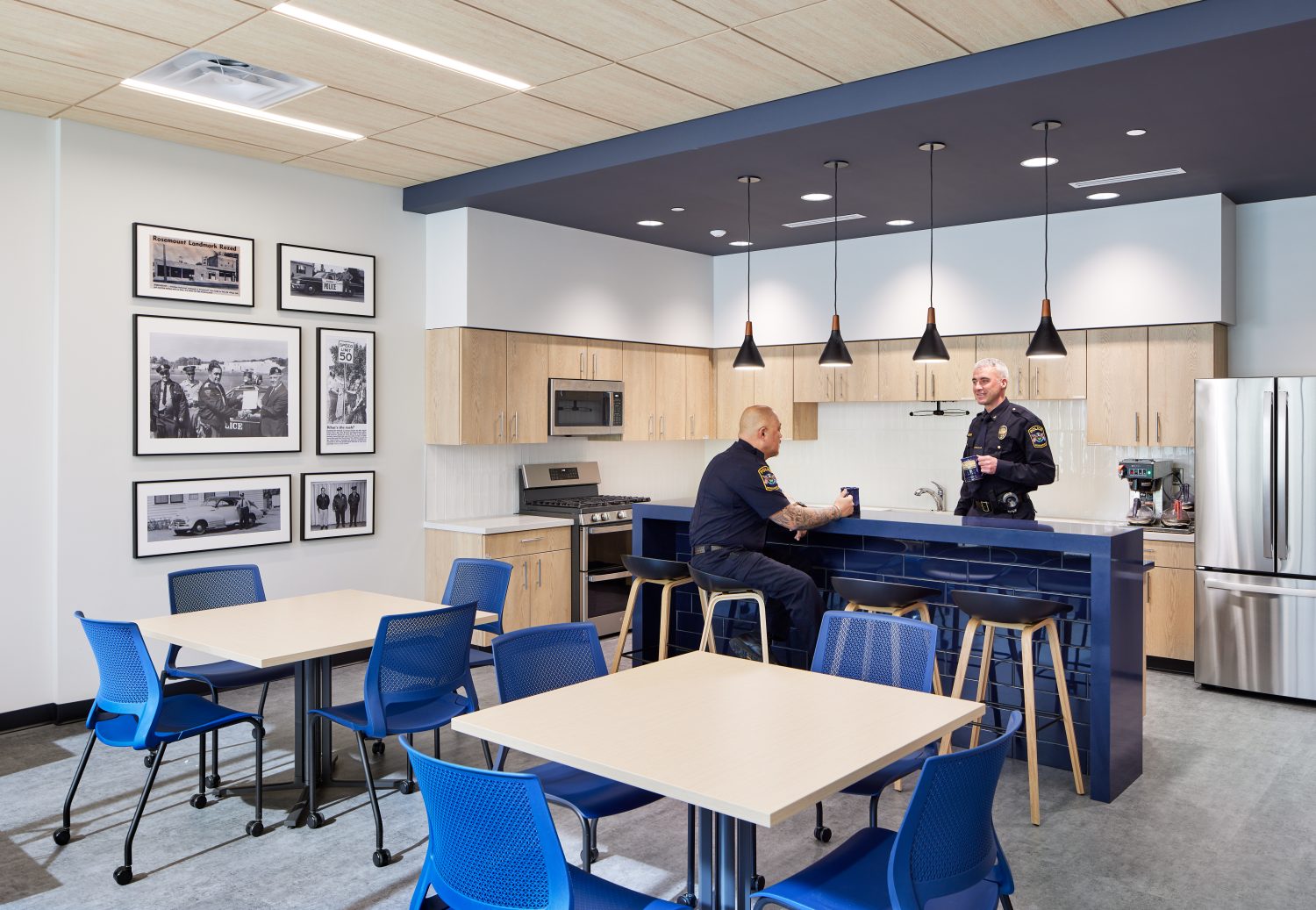
Equally important is mental and emotional resilience. Both police officers and firefighters are regularly exposed to trauma. Facilities that include spaces for decompression, recovery, and access to counseling—whether on-site or through partner organizations—help departments address that reality. Supporting personnel after difficult incidents is not a luxury—it is necessary to sustain long-term performance.
Better-supported personnel perform better under pressure—and sustain that performance over time.
Resilience and Continuity
Public safety facilities must also function when they are needed most. New facilities are often designed with resilience in mind—incorporating backup systems, hardened infrastructure, and the ability to operate during extreme events. Whether responding to natural disasters, major incidents, or prolonged emergencies, these facilities serve as reliable bases of operation—ensuring services remain available when the community depends on them most.
Community Safety and Stewardship
Public safety facilities are ultimately investments in how a community is served. They are investments in preparedness, coordination, and the long-term effectiveness of those responsible for protecting the community.
Individually, elements like response efficiency, training, coordination, wellness, and resilience may seem incremental. Together, they shape how effectively departments operate—not only in responding to emergencies, but in proactively addressing community needs through prevention, partnership, and service. Facilities do not replace the people responsible for keeping a community safe. They influence how well those people can perform their jobs, how effectively they work together, and how prepared they are when critical moments occur. In public safety, small inefficiencies add up—and so do improvements.
Communities should expect these facilities to support operations, protect personnel, and function reliably over time. They should expect them to remove barriers, improve readiness, and support higher levels of performance. What they should not expect is that a building alone will solve every challenge. The goal of a public safety facility is not to promise safety. It is to ensure that when safety is needed, the people responsible are prepared, supported, and able to respond at the highest level.
Facilities do not create safety—but they enable it to be delivered more effectively.