
Boutique Hotel Design — Chapter 1: The Vibe Check
Authored By: Jonathan Cakert, Hospitality Practice Leader
Over the course of multiple chapters, BKV Group’s Hospitality Leader, Jonathan Cakert, will peel back the layers of boutique hotel design through his travels and stays at some of the most preeminent and memorable hotels of this product type. Within the series, Jon will recount his experiences at each venue through deep-dive case studies to discover what makes a boutique hotel successful.
Introduction:
The idea that a traveler simply needs a warm bed and a safe place to rest is as old as travel itself — an instinctive human need that everyone understands.
Recently, I had the chance to sit down with the wonderful Melanie Hanna and Bridget Santos from the Design Muse podcast, along with longtime industry colleague Vito Lotta, LOTTA Strategic Hospitality, to explore the deeper ethos of hospitality. It was a great conversation, and if you have a few minutes, I’d encourage you to give it a listen here:
The discussion left me wanting to keep pushing the topic further. In the weeks ahead, I’m excited to share some of my own perspectives on great hospitality spaces — what makes them memorable, how they capture a bit of magic, and how those successful threads might be thoughtfully woven back into our own work.
Consider it a kind of love letter to boutique hotels, written through the lens of a semi-professional traveler and a professional designer.
First Impressions Matter
Before the key card ever hits your palm, the hotel has already told its story. It’s in the scent that lingers as you step inside, the temperature of the light, the way sound softens or echoes around you. These first few seconds are theater—carefully staged, but never obvious. It’s subtle, immersive, and it sticks.
For designers, this is world-building. Every surface, sound, and shadow contributes to a mood that defines the experience. For operators, it’s about carrying that mood forward — training a team not just to deliver service, but to perform a brand. From booking confirmation to farewell, the continuity between space and service is what creates an emotional imprint that lasts long after checkout.
But how do we design for something intangible?
How do we articulate vibe — that ephemeral mix of tone, energy, and emotion that defines a truly great stay?
If we were designing a hotel together, what would be our guiding principles? The easy answer might be: it depends. Each property, each neighborhood, each owner has its own set of buzzwords — authentic, playful, timeless, bold. But beyond the branding workshop and the mood boards, there’s a singular goal: find the vibe.
Case Study: Chicago Athletic Association
Walk into the Chicago Athletic Association, and you’re immediately off balance — in the best way. The journey to the front desk begins in what feels like an office lobby, clad in marble and history. It’s not the typical hotel arrival sequence, but it is distinctly Chicago: moody, muscular, cinematic. You can almost imagine a scene from Road to Perdition or The Untouchables unfolding there.
Originally an office building and private social club, the CAA’s transformation honors that lineage rather than erasing it. The atmosphere feels clubby, secretive, and storied — a place that existed long before you arrived, and will continue to hum with energy long after you leave.
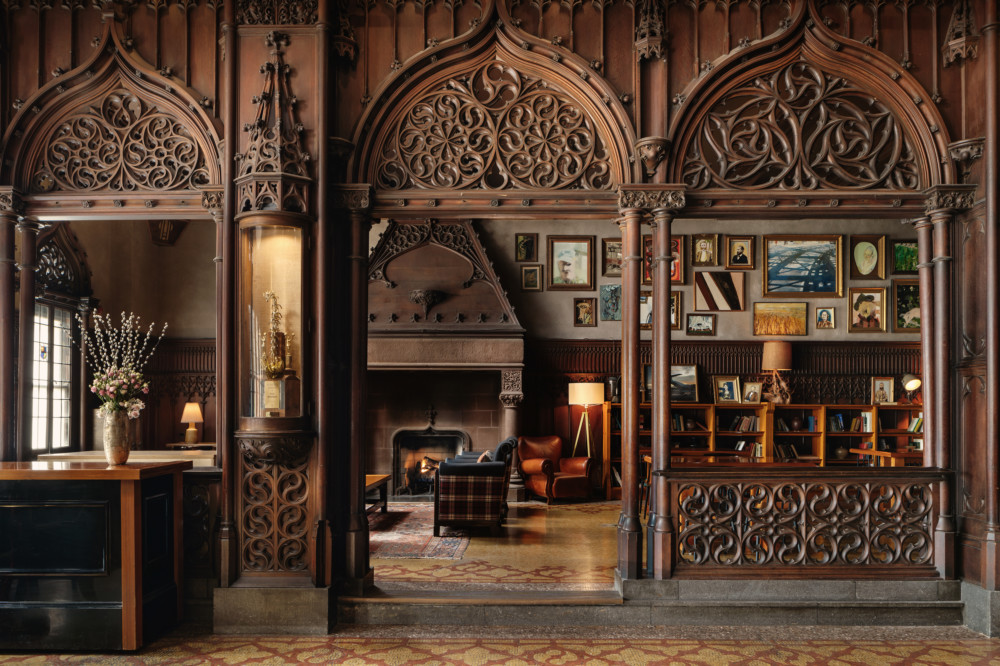
At check-in, the desk commands the room. Low lighting, dark wood millwork, and a massive stone fireplace create a space that feels more like the backdrop to a turn-of-the-century painting than a modern hotel lobby. The wingback chairs might not invite you to linger, but that’s the point: they’re there to evoke, not just to serve.
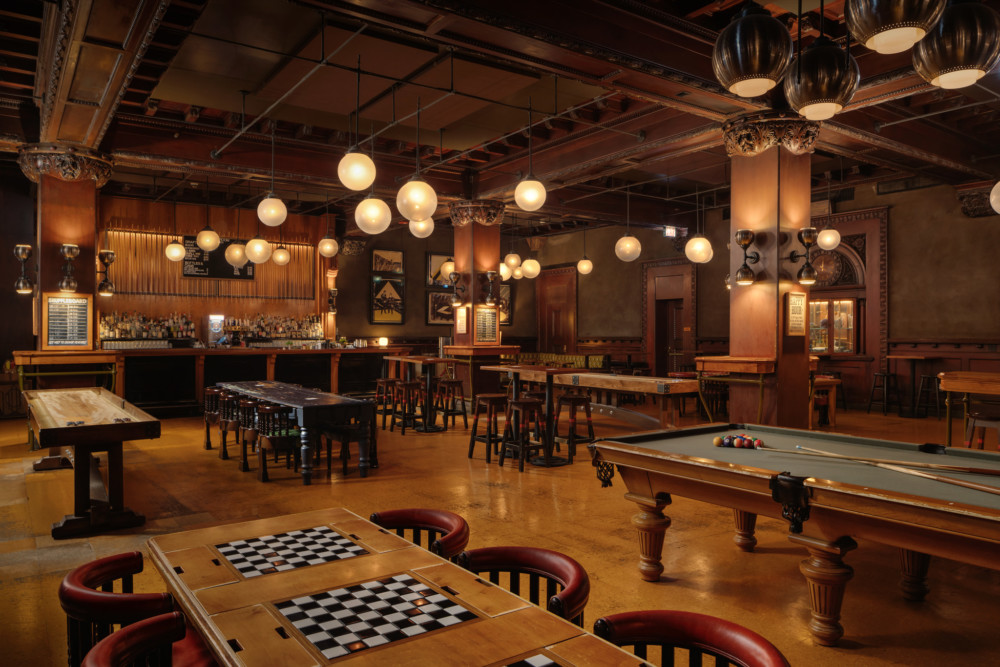
Then, as you move deeper into the building — past corridors, toward the elevator lobby — you find yourself in the Game Room. Suddenly the formality melts away. Shuffleboard tables, beer taps, and communal seating create a striking contrast to the earlier mood. It’s a social decompression chamber — a transition from stately history to lived experience.
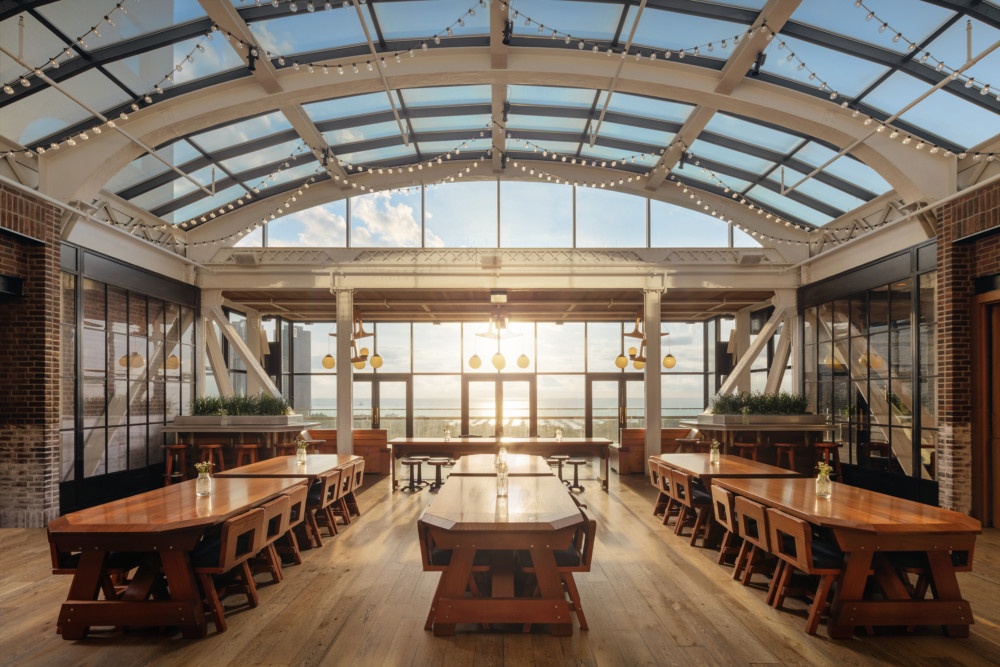
By the time you reach Cindy’s, the rooftop restaurant, the vibe has evolved again — open, luminous, alive. I’ve always gotten treehouse/attic vibes from the space from the immersive structure of the glass roof. Each space acts like a chapter in a larger narrative, each transition deepening your understanding of what this place is really about.
The Chicago Athletic Association doesn’t just set a vibe — it reveals it, one scene at a time.
The Designer’s Conversation
We can’t distill this feeling under a microscope or reverse-engineer its formula. The vibe isn’t something you can copy-paste — it’s something you tune into. But we can identify the guideposts that lead us there.
For this chapter’s Designer Conversation, I linked back up with Vito Lotta. Together, we took a deeper dive into what might be hiding inside the fingerprints of those standout success stories.
Our format – quick questions, deep thoughts, and an unapologetic hot-take:
Jonathan Cakert (JC): When a guest walks into a hotel for the first time, what emotional reaction are you hoping to create?
Vito Lotta (VL): “The moment a guest arrives, they should feel a quiet sense of relief that they’ve made the right choice. There’s always some level of tension when someone walks in, whether it’s exhaustion, anticipation, or expectation shaped by everything they’ve seen before arrival. They cross the threshold, get their bearings, and take that first breath. What we’re aiming for is that internal reset, where the body relaxes before the mind fully processes why. And if you can elevate that into a sense of ‘this is better than I expected,’ that’s where it becomes memorable.”
JC: What separates a beautiful hotel space from a truly memorable one?
VL: “A beautiful space is something you look at, a memorable one is something you instinctively know how to be in and can’t quite forget.”
JC: Are there small design decisions that end up having a disproportionate impact on the experience of a space?
VL: “A great space doesn’t need to be learned, it’s understood instantly. You can walk into something entirely new, visually unlike anything you’ve experienced, and still know exactly how to use it without thinking. When that happens, it feels like the space already belongs to you. The gap we still see in hospitality is that even experienced travelers pause and hesitate, and if they do, everyone else certainly will. The goal is intuitive engagement, where unfamiliar aesthetics meet familiar behavior, and the experience feels effortless from the first moment.”
JC: What is a hotel space anywhere in the world that you think truly gets it right?
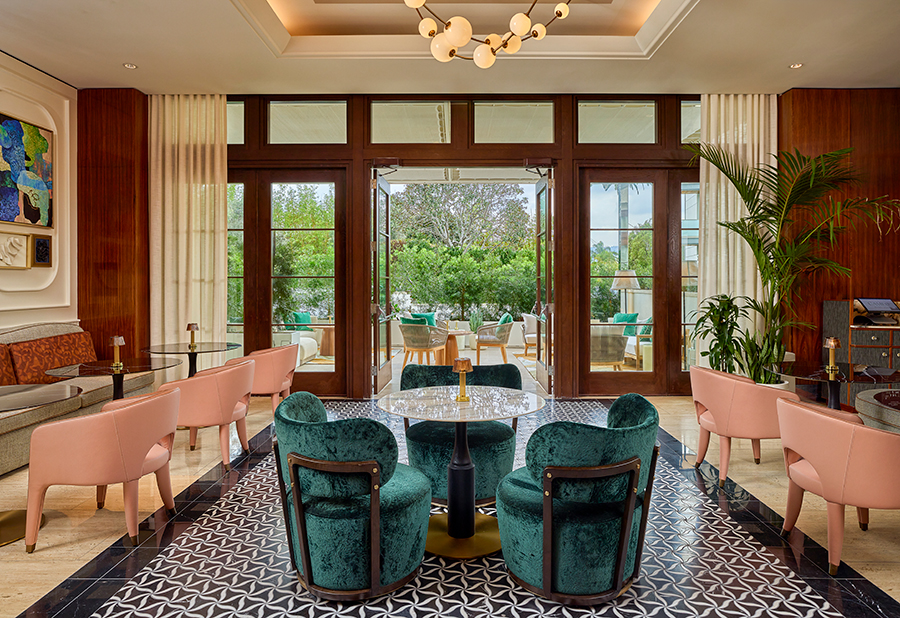
VL: “I’m a tough critic, so there isn’t a property that I would point to and say it resolves everything. There’s always a sense of could’ve, should’ve, would’ve when you look closely enough. What I find more useful is a different question. When I’m in a city, what is the place I instinctively think of as my home base? In Los Angeles, that has become the Cameo Beverly Hills. I find myself inviting people to meet me there, for conversations in the lobby, working sessions on the outdoor terrace, or something more social in the evening. The space supports these shifts without effort.
What’s interesting is how this relates back to your point. Cameo doesn’t reveal itself in chapters the way CAA does. It holds a consistent tone from the moment you arrive. The experience is less about progression and more about continuity. In some ways, that’s harder to get right. And it begins to raise a question around memorability versus comfort.”
Because at the end of the day, finding the vibe isn’t just about design, or brand, or even guest satisfaction—it’s about resonance. It’s about building a memory that hums in the background of someone’s life long after they’ve moved on to the next destination.
From Designer to Developer – Key Considerations:
- The first impression is your ROI moment.
- The vibe can’t be value-engineered at the end.
- Authenticity scales; imitation doesn’t.
- Your first 30 seconds should answer three questions:
- Where am I? (a sense of place)
- Who am I here? (a sense of belonging or aspiration)
- Why does this feel different? (a sense of discovery)
A hotel’s vibe isn’t designed — it’s orchestrated. Get that right, and the market will feel it before they ever walk through the door.
Chicago Athletic Association Attribution:
Architecture by Hartshorne Plunkard Architecture
Interiors by Roman and Williams
Photographer for the published project set by Nick Simonite
Cameo Beverly Hills Attribution:
Architecture and Interiors by Premier