Fire Stations are Critical Community Resilience Infrastructure
Authored By: Craig Carter, Fire/EMS Practice Leader, Partner
As long as there have been Fire Stations, they have been distributed throughout the communities they serve, minimizing response time to incidents that can escalate rapidly. But as costs have grown and departments are doing more with fewer staff and less funding, the many additional benefits to distributing municipal resources have grown apparent. For instance, consider the following:
- A problem at one building, such as a roof leak, power outage, or bedbug infestation, does not take down the whole system, leaving most of the Department able to continue to respond to emergencies, and potentially able to house displaced units until the crisis abates.
- Any incident can be approached from multiple directions at once, so if a train blocks response, another station can be dispatched and arrive in a timely matter.
- Each station reduces crime and increases civic engagement in its immediate vicinity while providing a point of connection between the citizens of the neighborhood and the Department.
- Stations of different vintages, different materials, and different configurations will not all fail at the same time, and will not all be susceptible to changing climate in the same way.
In short, distributing resources across an inter-reliant network is an excellent way to design a resilient system that is more than the sum of it’s parts. It is through this lens that Fire Departments must view their portfolio of Stations.
But all too frequently, Departments find themselves needing to remodel or replace a fire station with urgency, or are tasked with their elected officials with staying inside a limited scope for their project. Station improvement projects undertaken under this context are not without value to the community, but the value is limited. Forward-thinking Departments take on strategic visioning projects years prior to actual project needs, and update the vision at regular intervals.
Such master planning projects provide predictability for the organization, addressing key questions such as:
- When will we need to invest in new apparatus doors?
- How much will we need to spend on repairs annually?
- When we will this building wear out and necessitate replacement?
- Can we acquire property when it naturally comes on the market?
That said, effective master planning also allows Departments to reposition assets confidently, without spending money on a station that gets immediately decommissioned
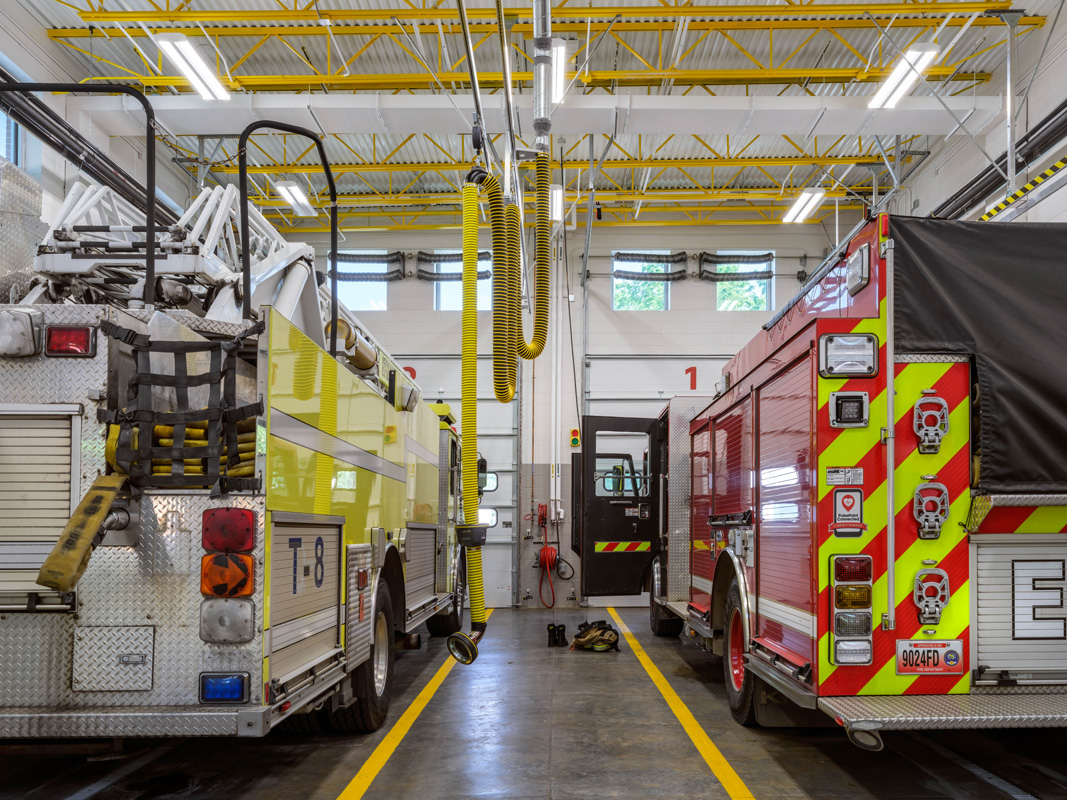
When Departments can take a step back and review their portfolio from a strategic perspective, without haste, many factors beyond speed-to-market open up, and they can make decisions with immense long-term value to the community. Ideally, the decisions about where to locate stations and deploy resources should look at the short-term and long-term impacts of issues like the following:
Refining Location for Response
- Considering the travel time to every corner of the response district remains important, and since development over the course of many decades is uncertain, it remains an essential strategy to being able to protect the entire community over the long run.
- Considering areas of call density, and positioning assets close to those hot spots, improves outcomes for the Deparment’s clients. Medical emergencies and fires get worse over time, so simply getting to an incident within your Standards of Cover is not the actual goal. Getting to those incidents as quickly as possible is the goal, and living closer is the best way to do that.
- Units cannot respond to an incident if they are already on another call, so call duration and Unit Hour Utilization are important metrics for understanding the level of service Departments are providing to the community. In parts of the community where this is a challenge, the Department needs to decide if the appropriate solution is adding another company to the Station or splitting the response district into two separate stations will improve service to a level that is worth the added long-term costs.
- Not all areas of a community represent the same level of risk. Older closely set homes, properties at the wildland urban interface, massive multistory multifamily mixed-use developments, and large-footprint industrial warehousing all represent large risk. It can be challenging to reach the actual problem once on scene, and a fire can easily become essentially impossible to extinguish offensively. Not only do the first-due units need to arrive on scene quickly, before the fire expands out of control, but they need to have detailed knowledge of the building layout so they need to spend time in pre-planning.
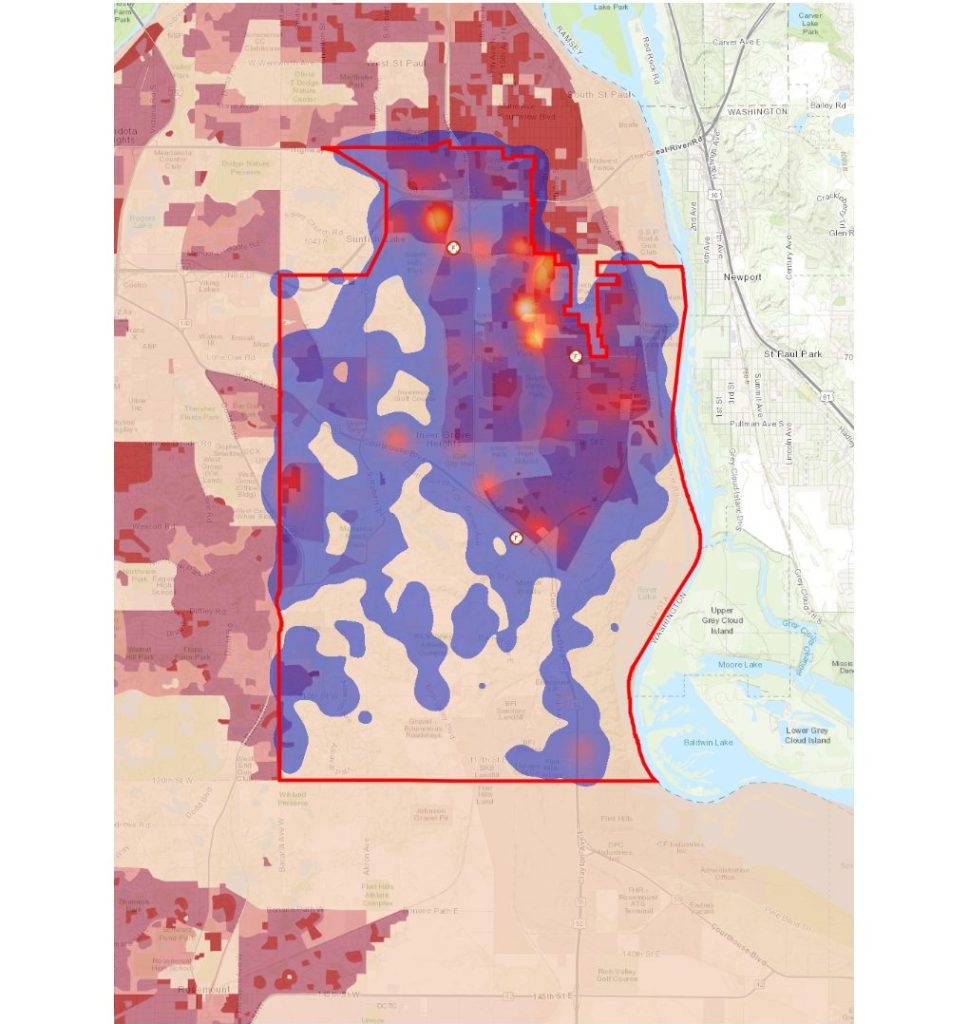
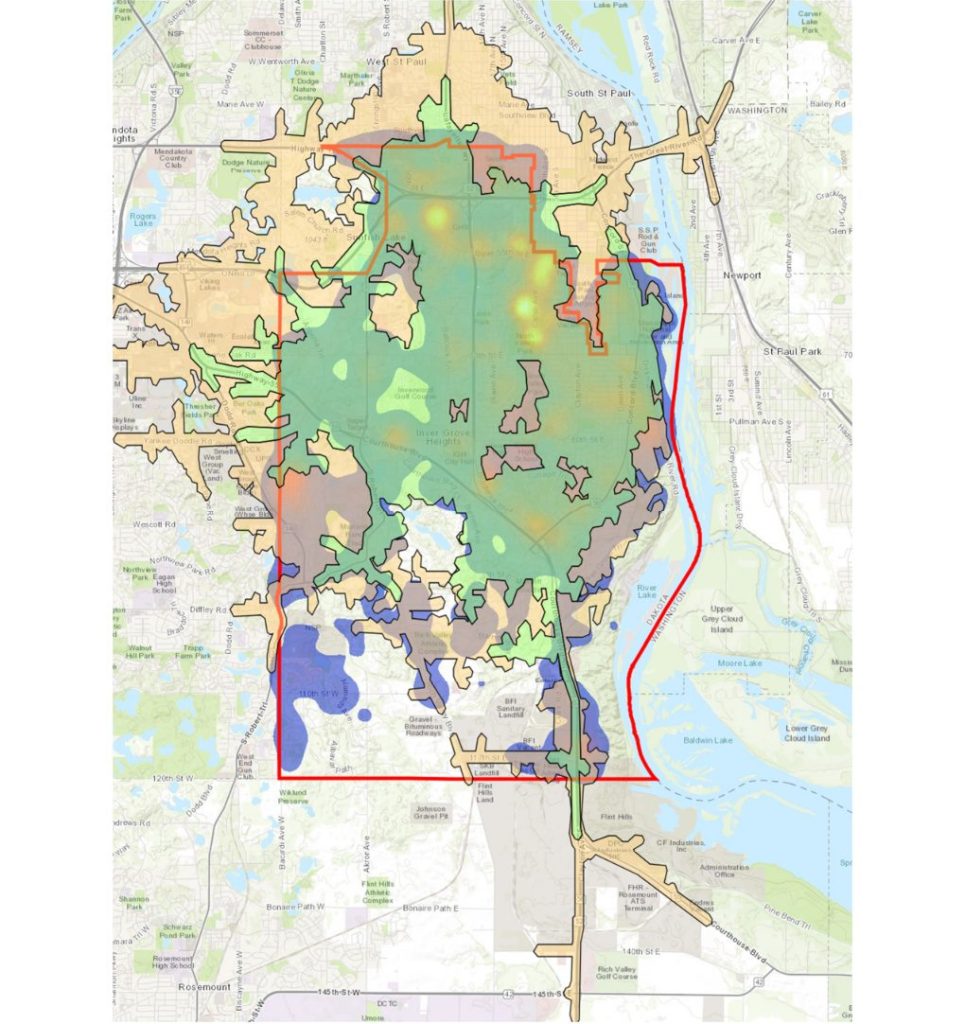
Cooperating Locations
- Specialized resources for low-frequency incidents don’t receive the attention of the public in the same way that ambulance, medic, and pumper units do, so they don’t focus on ready availability. With a long-term view, Departments can start to align the location of those resources with anticipated response areas instead of parking them wherever the Department has space.
- Since many incidents require complex response from multiple companies, the ability of the System to reinforce into other response districts is an essential measure of success.
Locations with Public Presence
- Fire Departments are frequently popular with their communities, but the more visible the Department, the more popular it becomes. This popularity is impacted by participating in community events and by public outreach activities, but it also impacted by day-to-day drive-by traffic. If the Stations are in highly visible location, designed with civic presence, maintained in excellent physical condition, and have a certain amount of visible activity by the firefighters, the impact to public pride and morale is immense.
Large departments can more easily undertake a project with this broad scope, but the benefits of a holistic approach to advance planning can be realized by groups of frequently cooperating agencies, such as a MABAS unit or a County full of municipal departments and independent fire districts. Helping the elected officials understand the community’s portfolio of Stations as critical resilience infrastructure that citizens rely on for day-to-day safety will help them make decisions that have the best long-term value. By looking at the forest, instead of just the trees, the network of Stations can truly become more than the sum of its parts.